
Professional Teeth Whitening vs Whitening Strips
You stand in the pharmacy aisle in NW Las Vegas, holding a box of whitening strips, and the box promises a brighter smile in a week. Across town, a dental office offers in-office whitening and custom take-home trays for more money. Both claim to lighten stained teeth, so the natural question is whether the price gap buys anything real or just a fancier label.
The short answer is that the two approaches share a chemistry but not much else. Strips and professional whitening both rely on a peroxide gel that breaks down stain molecules inside the enamel. What changes between them is the strength of that gel, how evenly it touches the tooth, how well your gums stay protected, and whether anyone is watching for trouble. Those four things are where results and comfort either hold together or fall apart.
What sits on a drugstore shelf, and what sits in a dental chair
Whitening strips are thin, flexible plastic films coated with a layer of peroxide gel. You press them onto the front teeth, wait the labeled time, then peel them off. They are designed to be one-size, which is the root of several limitations covered below.
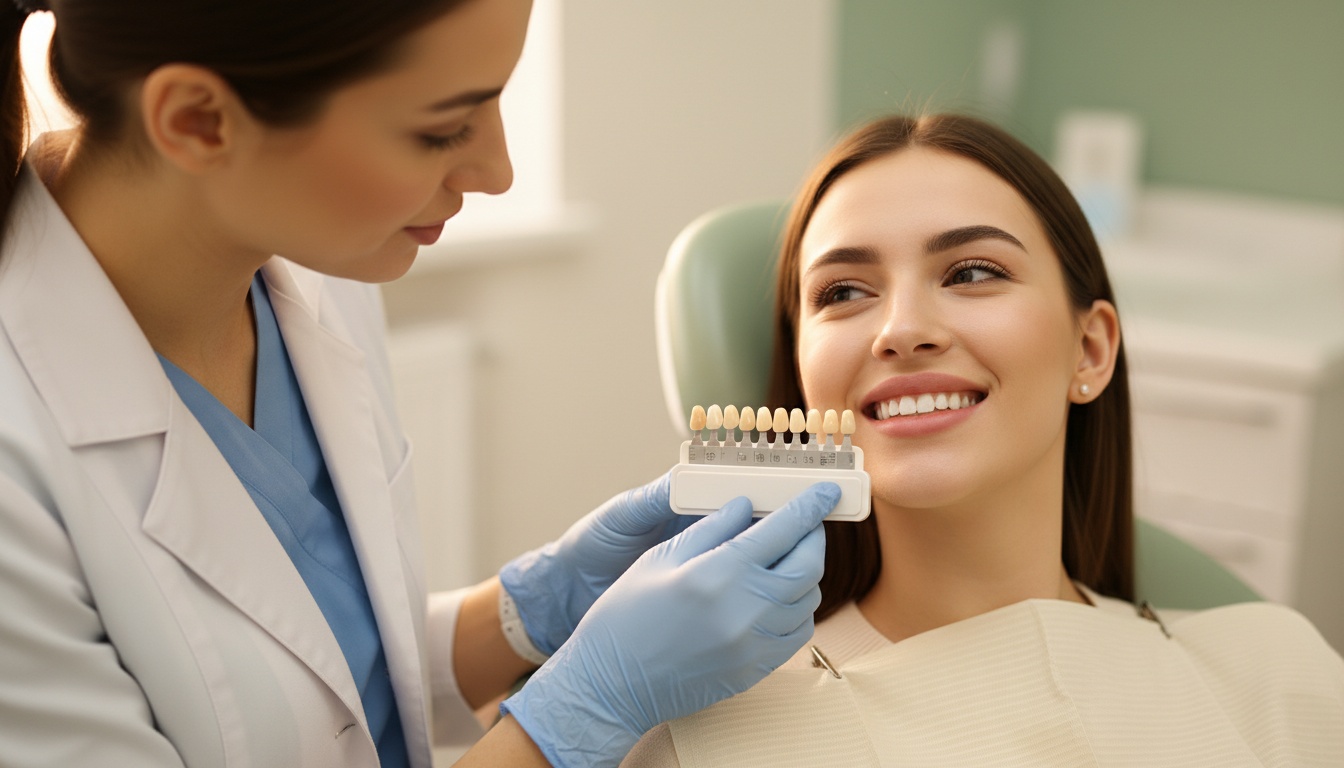
Professional whitening comes in two common forms. In-office whitening uses a stronger gel applied by the dental team, often with a barrier placed along the gumline first. Dentist-supervised take-home whitening uses custom trays molded to your teeth, filled with a gel you wear at home over a set number of days. Both run through teeth whitening at the practice, and both start with an exam rather than a guess.
That exam matters more than it sounds. Stains are not all the same. Surface stains from coffee, tea, red wine, and tobacco respond to peroxide. Discoloration from old fillings, trauma, or certain medications may not lighten at all, and no strip or gel changes that. Knowing which kind you have before you spend money is the first honest step.
Gel strength is the first real difference
The active ingredient in most whitening is either hydrogen peroxide or carbamide peroxide. Carbamide peroxide breaks down into hydrogen peroxide once it touches the tooth, so a carbamide concentration of roughly three times a given hydrogen peroxide number lands in a similar range of active strength.
Drugstore strips usually carry low concentrations, often in the single-digit percentages of hydrogen peroxide. That keeps them safe to sell without supervision, which is the point. It also means the gel works slowly and tops out at a modest result.
Professional gels run stronger. In-office hydrogen peroxide concentrations can sit much higher, and dentist-supervised take-home carbamide peroxide gels are formulated for trays you wear at home. The higher strength can lighten further and often faster, but it also raises the odds of sensitivity, which is exactly why the stronger versions stay under a dentist's hand rather than on a shelf.
Fit and coverage decide where the gel actually goes
A whitening result is only as even as the gel contact behind it. This is where one-size strips and custom trays separate the most.
Strips are flat films built for an average arch. Real teeth are not flat or average. They curve, they overlap a little, and some sit rotated or set back from the line. A strip bridges across those contours instead of wrapping into them, so the gel touches the high spots and skips the dips. The result can be bright across the front faces and dull in the grooves between teeth, which reads as a streaky or patchy smile up close.
Custom take-home trays are molded from an impression or scan of your own arch. The gel sits against the whole visible surface, including the curves a strip would skip. Coverage reaches the canines and the teeth toward the corners of the smile, not just the four or six front teeth a strip tends to cover. More even contact tends to produce more even color, which is the whole goal.
Gum protection and why it matters
Peroxide does not know the difference between enamel and gum tissue. On the gums it can cause a white, tender, irritated patch that fades but stings while it lasts. The stronger the gel, the more that protection matters.
Strips manage this risk by staying weak and by asking you to keep the film off the gumline. In practice the film slides, and the gel migrates, so minor gum irritation is a common complaint with at-home strips even at low strength.
Professional whitening handles gingival protection directly. For in-office treatment, a barrier is placed along the gumline before the strong gel goes on, walling the tissue off from the peroxide. Custom trays are trimmed to follow the gumline so the gel pools against the tooth and not the soft tissue. Neither approach is perfect, but both are built to keep a strong gel where it belongs. That control is part of what you pay for.
Even color across the whole smile
A whitening result that looks good in the mirror has to look good across the full width of the smile, not only on the two front teeth. This is the practical payoff of fit and coverage working together.
With strips, the lightening concentrates where the film presses hardest and overlaps least, usually the flat centers of the front teeth. The teeth toward the corners, the ones that show when you smile wide, often get less gel and less change. Over several rounds the gap can grow rather than shrink.
There is also the matter of existing dental work. Whitening gel lightens natural enamel, not porcelain or composite. If you have a crown, a veneer, or a tooth-colored filling in the smile zone, it will hold its current shade while the natural teeth around it lighten, which can leave a visible mismatch. A dentist can flag that before you start, and we cover the details in does whitening work on crowns and veneers . Strips come with no such heads-up.
Supervision when sensitivity shows up
Tooth sensitivity is the most common side effect of any whitening, strip or professional. Peroxide opens microscopic channels in the enamel that let cold and air reach the nerve more easily, which produces the sharp, short zings people describe during and after treatment. For most people the sensitivity is temporary and settles within a few days of stopping.
With strips you are on your own to judge it. There is no one to tell you whether to lower the frequency, switch to a desensitizing toothpaste with potassium nitrate or fluoride, or stop entirely. People often push through discomfort because the box says to finish the course, which can make the sensitivity worse than it needed to be.
Dentist-supervised whitening adjusts. The strength can be dialed down, the wear time shortened, the schedule spaced out, or a desensitizing step added between sessions. If a sore tooth turns out to be a crack or decay rather than normal whitening sensitivity, the exam catches it instead of letting a stronger gel make it hurt more. We go deeper on managing this in whitening sensitivity, what to know .
- Strips: fixed strength, no adjustment, you decide alone whether to continue.
- Professional: strength and timing can change, and a real cause behind the pain gets ruled out.
When whitening strips are a reasonable choice
None of this means strips are a scam. For the right situation they are a sensible, low-cost option, and pretending otherwise would not be honest.
If your teeth are healthy, your gums are not inflamed, you have no crowns or veneers in the smile zone, and you want a modest brightening before an event without spending much, strips can do the job. They are also a fair way to test whether your teeth tolerate peroxide at all before committing to a professional plan. The trade-off you accept is slower progress, a lower ceiling on how white you can get, less even coverage, and no one watching for sensitivity or hidden problems.
Where strips fall short is on deeper staining, an uneven starting color, a history of sensitive teeth, or existing dental work in front. Those are the cases where custom trays or in-office treatment earn the extra cost, and where guessing with a drugstore box tends to disappoint. If budget is the main worry, it is worth comparing the real numbers, which we lay out in teeth whitening cost in Las Vegas , and asking which approach fits your teeth rather than defaulting to the cheapest box. Whitening is one piece of cosmetic dentistry , and the right starting point depends on what your smile actually needs.
Frequently Asked Questions
Are professional whitening results permanent? No whitening is permanent, since the same foods and drinks that stained your teeth keep doing so over time. Professional results often last longer than strips because the starting result is more thorough and more even. Occasional touch-ups with take-home trays can help maintain the shade.
Will whitening damage my enamel? Used as directed, peroxide whitening does not strip or thin enamel. It temporarily opens microscopic channels that can cause short-term sensitivity, which usually settles within days. Overusing strips beyond their labeled schedule is where people most often run into trouble.
Can I use whitening strips if I have a crown or veneer? You can use them, but the crown or veneer will not change color, because peroxide only lightens natural enamel. If the dental work sits in your smile zone, your natural teeth may end up lighter than it, creating a mismatch. A quick exam can tell you whether whitening makes sense for your situation first.
How long does in-office whitening take? In-office whitening is typically done in a single appointment, often within about an hour, since it uses a stronger gel applied by the dental team. Custom take-home trays work more gradually over a set number of days at home. Which one fits depends on your teeth, your timeline, and your sensitivity.
Why do my teeth feel sensitive after whitening? Peroxide briefly opens tiny channels in the enamel that let cold and air reach the nerve more easily, which causes the sharp, short sensitivity many people notice. It is usually temporary and eases within a few days. A desensitizing toothpaste with potassium nitrate or fluoride can help, and a dentist can adjust the plan if it lingers.
Book a whitening consultation in NW Las Vegas
If you are weighing strips against professional whitening and want a straight answer about which fits your teeth, Dr. Hidy Stavarache can look at your smile and tell you honestly what will and will not work. Stavarache Family Dental has cared for NW Las Vegas families on West Cheyenne Avenue since 1995, with one dentist and no pressure to buy more than you need. Call (702) 233-8371 or book through our contact page to set up a visit.